
'/%3E%3C/svg%3E)

Article Overview:
Introduction:
10 Golden Website Design Trends for 2025 That Transform Your Site’s Look
A few years ago, website design was mostly about combining colors, images, and layouts. In 2025, everything has changed.
Today, web design is about creating a fast, intelligent, enjoyable, and personalized user experience—one where AI, speed, simplicity, and accessibility play central roles. When considering modern Website Design Trends, a wide range of approaches and styles is available: you can create a classic or minimalist site, design something vibrant and energetic, or craft a sleek, modern look.
Ultimately, your website’s appearance should clearly reflect your business domain, personality, and brand identity. At the same time, there are a few fundamental principles that remain relevant, whether you are building a new website or updating an existing one.
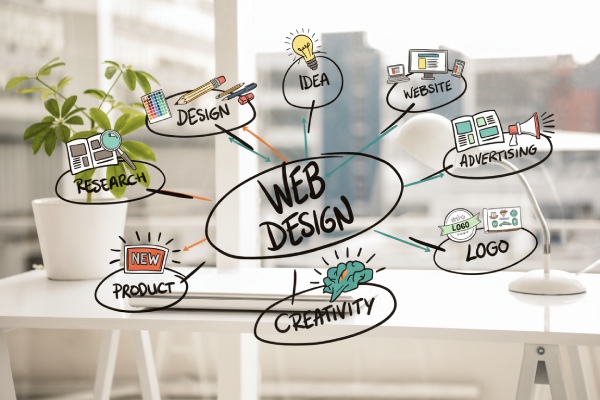
Putting Website Design Skills into Practice
Professional website design not only enhances user experience and site performance but also ensures that your site is immediately understandable at first glance. Here, we’ve compiled 10 simple yet effective tips for website design.
Ready to put your website design skills into practice? There’s no better time than now to create or revamp your site. In this article, we’ll explore the key tips and Website Design Trends that will make your website shine in 2025.
User Experience (UX): The Cornerstone of Website Design in 2025
In recent years, User Experience (UX) has become one of the most influential factors for successful website design. According to reports from the Nielsen Norman Group, one of the world’s leading authorities on UX, web designers need to think beyond tools; instead of focusing solely on appearance, they should analyze actual user behavior to create a seamless and functional experience.
In fact, not all trends are worth following. It’s essential to identify what truly helps users and what is merely a fleeting visual appeal—an approach central to modern Website Design Trends.
Artificial Intelligence: Designers’ Creative Partner
The role of AI in website design has become increasingly significant. Today, AI is no longer used solely for automation. In 2025, designers are embracing a human-machine collaboration model, where AI assists web designers to:
- Predict user behavior
- Test multiple design variations
- Personalize content for each user
- Generate creative ideas
As a result, your website becomes faster, smarter, and more user-centric.
Read more: Optimizing Your Website with AI in 2025
This integration of AI is one of the key factors shaping modern Website Design Trends, enabling sites to deliver exceptional user experiences while staying ahead in the competitive digital landscape.
Minimalism and White Space in Web Design
Research from Wix Blog shows that simplicity always wins. Your homepage should convey your main message at first glance. In reality, users rarely read all the text on a website; they quickly scan pages, focusing only on key sentences, keywords, and visuals. Therefore, rather than emphasizing lengthy content, focus on creating a clear impression and an intuitive experience. The less effort visitors need to read, click, or remember something, the easier it is for them to understand and evaluate your content.
With modern website design that accounts for users’ short attention spans, visitors are more likely to take the actions you expect. To build an engaging and functional homepage, keep these simple yet effective tips in mind:
Place important content above the fold: Users should immediately understand what your site is about without scrolling or clicking.
Create ample space between elements: For an attractive and user-friendly design, ensure enough spacing between sections and components. Use short, readable paragraphs so visitors can easily follow the content and absorb information quickly.
Use high-quality visuals: Images and icons can communicate your message more effectively than text while enhancing the visual appeal of your site.
Remember, proper use of white space allows each element to “breathe,” enabling users to interact with your site effortlessly. This principle is a key part of modern Website Design Trends, helping websites deliver clarity, elegance, and a seamless user experience.
Micro-interactions
In modern web design, microinteractions and subtle interactions play a crucial role in user experience. Examples include:
- Button hover effects
- Subtle shake on error
- Smooth scroll animations
Interactive and gamified websites often engage users more effectively. However, it’s essential to ensure that these animations do not compromise site speed.
Incorporating thoughtful microinteractions is a key aspect of contemporary Website Design Trends, helping websites feel more dynamic, intuitive, and enjoyable for visitors.
Responsive and Mobile-First Web Design
Remember, most users access websites via mobile devices, and Google now prioritizes the mobile version for ranking. Therefore, one of the most critical aspects of website design is ensuring your site performs smoothly, quickly, and elegantly on mobile. If your website is not optimized for mobile, you risk losing a significant portion of your audience.
Focusing on mobile-first design is a fundamental principle in modern Website Design Trends, ensuring better usability, higher engagement, and improved search engine performance.
Website Performance and Core Web Vitals
Google evaluates website performance using three key metrics:
- Largest Contentful Paint (LCP)
- Cumulative Layout Shift (CLS)
- Interaction to Next Paint (INP)
These three metrics, known as Core Web Vitals, directly impact both SEO and user satisfaction. To improve them, you should:
- Optimize images
- Enable caching
- Use lazy loading
A slow website, no matter how visually appealing, will drive users away. Prioritizing performance is a crucial part of modern Website Design Trends, ensuring fast, smooth, and user-friendly web experiences.
Sustainable Design
One of the key and emerging Website Design Trends for 2025 is sustainable design, which focuses on creating websites that:
- Are lightweight
- Consume less energy
- Use fewer server resources
Sustainable design not only benefits the environment but also enhances website speed and improves user experience.
Read more: A Complete and Practical Guide to Prompt Engineering
Sustainable Design
In professional web design, user accessibility standards must be followed. This means creating websites that are usable for everyone, including individuals with visual, motor, or hearing impairments. Key considerations include:
- Proper color contrast
- Readable fonts
- Alternative text for images
- Full keyboard navigation support
Ensuring easy access to your website not only shows respect for users but also positively impacts Google rankings. Prioritizing accessibility is an essential aspect of modern Website Design Trends, helping create inclusive, user-friendly, and high-performing websites.
Dynamic Typography and Bold Colors
The year 2025 is shaping up to be the year of powerful typography. According to analysis by Clay Global, brands are moving toward:
- Larger fonts
- Bold color combinations
- High contrast
- Full support for Dark Mode
Effective typography not only makes your brand message clearer but also enhances the overall user experience. Incorporating dynamic fonts and bold colors is a key element in modern Website Design Trends, helping websites stand out and engage users more effectively.
Human-AI Collaborative Web Design
Web design has entered an entirely new phase, where humans and AI work together to elevate creativity. Tools like Framer AI, Uizard, Figma AI, and Galileo AI are transforming the design process.
- Framer AI allows you to create animations, build responsive pages, and even automatically translate your site with just a few lines of text—all powered by AI and in record time.
- Uizard simplifies designers’ work: just write text or scan a hand-drawn sketch, and editable prototypes and wireframes are instantly ready for collaborative team environments.
- Figma AI takes it a step further, integrating AI directly with layers and design code to enable true collaboration between designers and AI.
- Galileo AI is a powerful tool that generates user interfaces from text descriptions or images, with outputs that can be directly imported into Figma.
This human-AI collaboration is one of the cutting-edge Website Design Trends, allowing designers to work faster, smarter, and more creatively than ever before.
What You Should Know Before Designing a Website
A modern website is more than looks—it combines standards and principles to deliver a fast, smooth, and reliable user experience. Prioritize UX, mobile-first design, smart AI-powered personalization, light animations, and accessibility. Following these best practices is key in today’s Website Design Trends, helping your site stand out and engage users effectively.
Article writer

Mehrnoosh Choobandian
Director of Bazarento
Ph.D. in Marketing
Marketing & Branding Strategist
The Next Step in Website Design: Start with Bazarento
Bazarento helps brands gain visibility, build trust, and boost online sales with expert website design solutions. Start your digital growth journey smartly—get a standard, attractive, and future-ready website today. By following modern Website Design Trends, your site can stand out and engage users effectively.